
RETINA: Reliable Eye Tracking In Neurocognitive Assessment
An objective, rapid “digital vital sign” for cognition using synchronized eye tracking, pupillometry, and response-time metrics

Cognitive function is difficult to measure objectively
Across research, clinical trials, and applied settings, cognition is still assessed primarily through subjective testing, coarse screening tools, or time-intensive batteries. These approaches often lack sensitivity to subtle impairment or change, are difficult to scale, and can be poorly suited to repeated or longitudinal measurement.

RETINA captures objective cognitive signals in minutes
Eye movements: attention, executive control, inhibition, and processing dynamics
Pupil responses: cognitive load and autonomic modulation
Manual responses: reaction time and accuracy under controlled cognitive demand
Standardized cues: designed to probe specific neurocognitive systems

Designed for sensitivity, speed, and scalability
Sensitive to targeted cognitive impairment and change, not just gross deficits
Rapid and repeatable, enabling longitudinal and interventional measurement
Objective by design, eliminating confounds and reducing dependence on subjective scoring
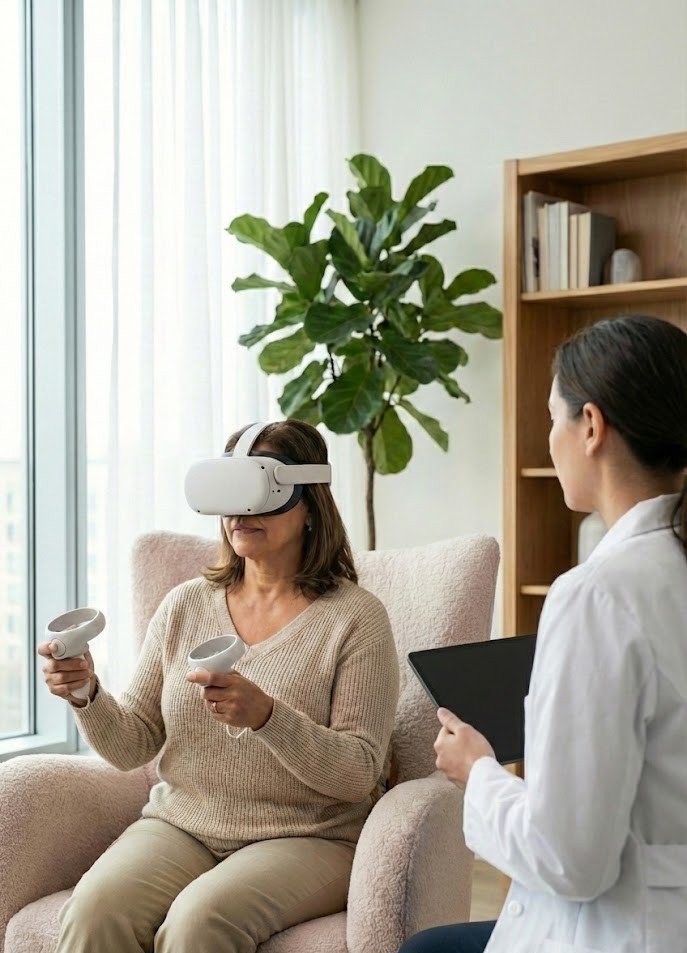
Applications across research and applied brain health.
Neurocognitive research: objective endpoints for studies of attention, executive function, and processing speed
Biopharma clinical trials: sensitive digital neurocognitive endpoints for intervention effects
Occupational and operational readiness: scalable assessment in high-performance or safety-critical settings

Clinical Applications Following Regulatory Clearance
General Cognitive Assessment: Objective measures of attention, processing speed, and executive function.
Concussion / TBI: Quantitative tracking of cognitive impairment and recovery over time.
Mild Cognitive Impairment and Dementia: Sensitive monitoring of cognitive change and disease progression.
Multiple Sclerosis: Objective assessment of cognitive function and treatment-related change.
Alzheimer’s Disease: Neurocognitive metrics to support evaluation and longitudinal monitoring.
ADHD: Measurement of attentional control and executive function dynamics.
Other Neurological Conditions: Expandable use across conditions involving cognitive performance.

Built on a strong scientific foundation.
Integrates well-established cognitive paradigms
Patented core technology
15 years of peer-reviewed scientific validation
Ongoing applied studies